
Checking for a Warrant in Clay County
Begin with Indiana MyCase, the broadest public tool for Clay County cases. It searches court files, though, not a dedicated active-warrant database for the county. Run both the party search and the case or citation search. A name-only query can easily miss a traffic file, an odd spelling, or a number in a format you did not expect. Have a full name, date of birth, case number, or citation number ready before you start. If the file shows a warrant event, open the Chronological Case Summary, write down the court and date, and talk with the Clerk, the court, or a lawyer before paying anything or showing up.
- Search MyCase by party name, adding first name, middle name, and birth date to narrow common results.
- Repeat by case or citation number when one is available, omitting hyphens or leading zeroes if needed.
- Filter for Clay Circuit Court and Clay Superior Court, then review open and closed cases and the CCS.
- Call the Clerk at 812-448-9024, or traffic at 812-448-9032, when the public file is unclear.
- Use the issuing court for recall and hearing instructions, and the Sheriff at 812-446-2535 for custody logistics.
MyCase Is Not a Clay Warrant List
Clay County publishes no downloadable active-warrant list and no local warrant portal. MyCase is the closest broad substitute. The Indiana Judicial Branch notice states plainly that it does not cover every court, every era, or every public document. A blank search, then, is not clearance.
Use last name, then narrow with first name, middle name, and birth date.
A case or citation number can locate a file that a name search misses.
Check Clay Circuit and Clay Superior.
Read warrant, FTA, bond, hearing, payment, recall, and disposition entries in order.
The official search interface shows why this route is case-centered.
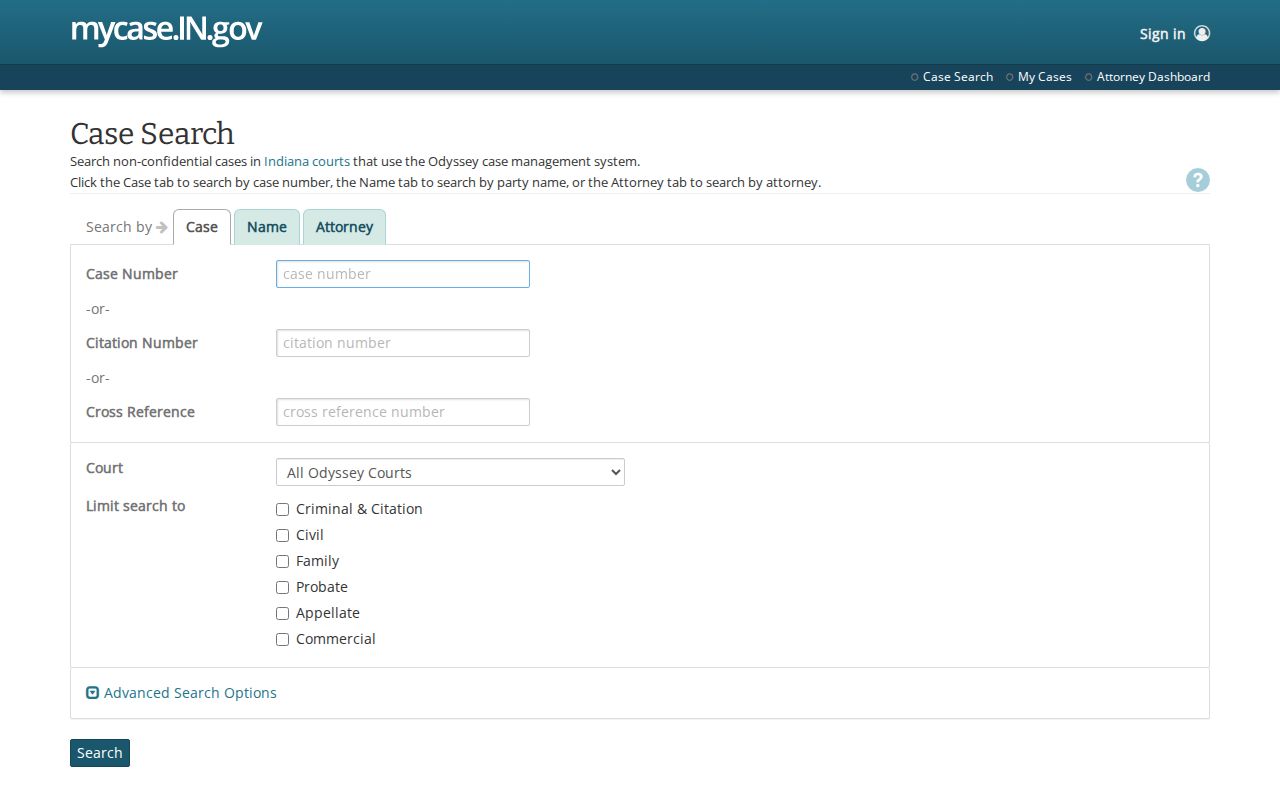
The site helps you find the file. The named Clay court gives the current, binding instructions.
Clay County Warrant Types
Warrant records in Clay County use several labels, and each one matters because the issuing authority and the fix differ. Indiana sources speak of arrest warrants, bench warrants, failure to appear, bond, traffic, and ordinance cases. Not every missed court date earns the capias label.
| Type | How it arises | Clay route |
|---|---|---|
| Arrest warrant | An indictment or probable-cause finding on a filed information | Assigned Circuit or Superior Court |
| Bench or FTA warrant | A missed required appearance, contempt, or failure to follow an order | Issuing court and its CCS |
| Traffic or ordinance warrant | A missed date or unresolved court obligation | Clay Superior Court |
| Search warrant | Permission to search based on probable cause | May remain restricted during an investigation |
| Civil body attachment | A missed rule-to-show-cause hearing after service | The civil case and court |
| Tax warrant | A Department of Revenue collection lien | Not an arrest warrant |
Clay Court Code 11 Identifies the File
An Indiana case number encodes the county, the court, and the case type. Clay County's local code is 11. That code separates a Clay County file from a same-named party elsewhere, but it says nothing about current warrant status on its own.
- CCS
- The Chronological Case Summary, listing court events by date.
- IF
- A traffic-infraction category assigned locally to Superior Court.
- OV
- An ordinance-violation category also assigned to Superior Court.
- FTA
- Failure to appear for a required setting, after which a warrant may issue.
Use that code to pull up the right file in Clay County, then ask the Clerk or the court what the latest entry means for you.
Inside a Clay County Warrant Record
A Clay County court file reads as a chain of events, not one tidy warrant card. An old issuance or recall entry can sit there after live status has changed. So read the newest entry, and confirm with the court.
| Case number | The Indiana identifier, often including Clay code 11. |
|---|---|
| Court | Clay Circuit or Superior Court, based on local allocation. |
| Charge | The offense or ordinance and its classification. |
| Warrant event | Issuance, service, return, recall, quash, or another status entry. |
| Bond | Public amount or conditions if entered; confirm current terms. |
| Next setting | A hearing date or instruction following an FTA or warrant event. |
Clay Clerk Records Fill MyCase Gaps
The Clay County Clerk keeps the county's court records in one office. Criminal paperwork flows through it: arrest warrants, bonds, jailer commitments and releases, and transport orders. MyCase works for a first look. But for a missing public document, a copy, a balance, or a question about the file, the Clerk is the local route. The Clerk responsibilities page lists those documents.
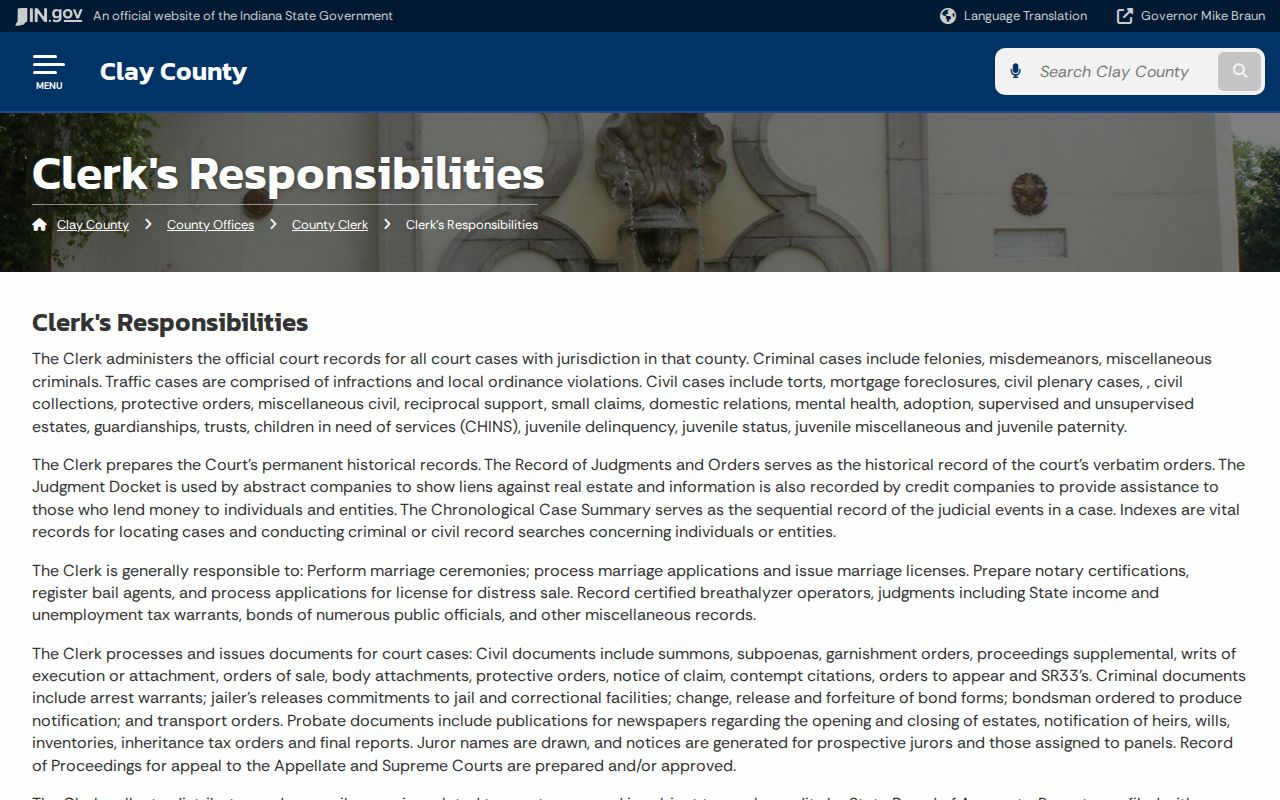
It supports a court-record request route, not a public roster of people.
Request tip: Give the name, case number, document, and date range whenever possible so staff can identify the public record.
Issuing and Serving Warrants in Clay County
Two courts handle the paperwork behind a Clay County warrant: Circuit and Superior. Judges there issue what the courts need, and the Clerk keeps the file. Indiana law sends an arrest warrant to the Sheriff, and any officer in the county may act on it. Serving one is the Sheriff's job; recalling or quashing it belongs to the issuing court alone.
Clay Circuit Court
609 E. National Ave., Brazil, IN
812-448-9036
Shared felony and other case allocation
Clay Superior Court
609 E. National Ave., Brazil, IN
812-448-9031
Traffic, ordinance, misdemeanor, and shared criminal work
Courthouse and Justice Center Roles Differ
Two buildings, two jobs. The courthouse at 609 East National Avenue holds the court and Clerk functions you need to identify a case, get court documents, and ask what judicial step comes next. The Sheriff and Justice Center at 611 East Jackson Street handles enforcement and custody questions. Call first. Neither office publishes Clay-specific surrender hours, a bond window, or an intake checklist, so the phone call is how you learn the current procedure. The official Clerk page lists public contact details.
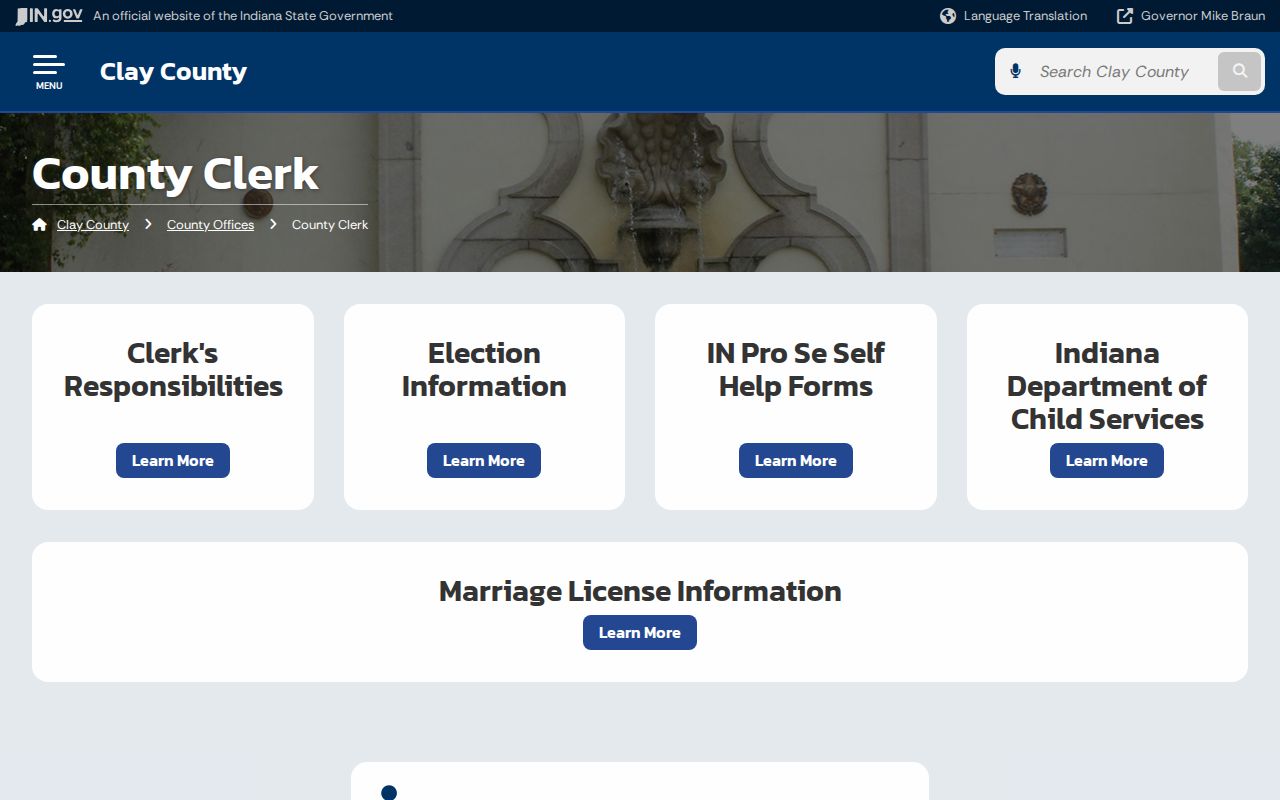
Clay County listings show Room 209 in one place and directory number 213 in another, so call ahead and confirm the room before you go.
If You Have a Warrant in Clay County
Write down the case number, the issuing court, the warrant or FTA date, the next hearing, and where each fact came from. Then ask whether the matter calls for a new setting, a payment, a recall or quash motion, a bond, an attorney-arranged walk-through, or a surrender. Clay County publishes no standing walk-in order, recall form, or amnesty procedure. Ask the court directly.
- Confirm the case through MyCase or the Clerk without assuming an old entry remains active.
- Speak with defense counsel when a criminal arrest warrant or surrender is involved.
- Ask the issuing court what action is allowed and whether a judge must act before payment changes anything.
- If surrender is required, call the Sheriff for destination, identification, intake, and bond directions.
- After court action, recheck the CCS and obtain written confirmation when available.
Important: Bond may secure appearance, but it does not decide the charge or guarantee an immediate online update.
Clay Traffic Cases Go to Superior Court
Clay local rules effective January 1, 2026 put traffic-infraction and ordinance-violation cases in Clay Superior Court. That rule is why a ticket from Brazil, Clay City, Knightsville, Harmony, or Staunton should never be routed to some assumed city court. No Clay County city or town court exists. For a missed traffic date, search the citation or party name in MyCase, read the CCS, and call traffic at 812-448-9032. Indiana Code 9-30-3-8 allows warrant and BMV reporting steps after certain failures to appear or satisfy a judgment. Clearing it is a court matter, not a driving-history product. The traffic warrant route walks through payment, resetting, judicial recall, and clearance.
Clay County Warrant Records and Public Access
Indiana's Access to Public Records Act frames police records. The Rules on Access to Court Records govern court files. Neither promises that everything shows up online. In Clay County, juvenile, sealed, expunged, protection-order, and other protected information may be withheld or redacted.
Key rules:
Indiana Code 5-14-3 provides the public-record framework, subject to exceptions.
Access to Court Records Rules 4 and 5 address public and excluded court information.
Indiana Code 31-39-1 generally protects juvenile court records, subject to stated access rules.
Police records and court records are two different streams. In Clay County, send court-file requests to the Clerk. Send law-enforcement requests to the agency that holds them.
No Clay Most-Wanted Roster Was Located
The county, the courts, and the Clay County Sheriff publish no active-warrant list, most-wanted roster, fugitive feature, reward schedule, or warrant roundup. The Sheriff's page promotes an app by QR code, but its text never promises warrant searching. Calling it a warrant portal would overstate what it is.
Blank-list caution: No public roster does not mean no warrant exists; check the case and confirm with the issuing court.
The sheriff and other Clay County offices publish no most-wanted feature of their own. That gap proves nothing about any case. Where a most-wanted page exists, it is a handpicked public-safety notice, not a full inventory of outstanding court process. It never lists every active warrant. The Clay Most Wanted List reference explains that difference without reposting names or images. Treat it as background only. Worried your own name is tied to a warrant? Identify the case and the issuing court. Then contact counsel and get direct instructions before acting. Members of the public should never approach someone over a rumor, an old docket entry, or an unofficial post; emergency concerns belong with emergency services, and routine warrant records questions belong with the Clerk, the court, or the Sheriff.
Clay Tax Warrants Do Not Order Arrest
Indiana's tax paperwork borrows the phrase "sheriff warrant," which trips readers up. A tax warrant is a collection lien, not an arrest order. It's a lien and nothing more. The Department of Revenue says so plainly. A criminal or failure-to-appear warrant, by contrast, belongs with the issuing court and its enforcement agency. A Clay County tax warrant runs through the DOR, the Clerk, and the sheriff's tax-collection route instead. Never infer arrest risk from a civil tax record.
Clay Hearing Reminders May Prevent FTA
Indiana's Odyssey program can text a reminder five days and one day before an eligible hearing. Fewer missed appearances means fewer FTA warrants. Ask the Clay County Clerk whether reminders cover your case, and never rely on a text alone. The state reminder page describes the service.
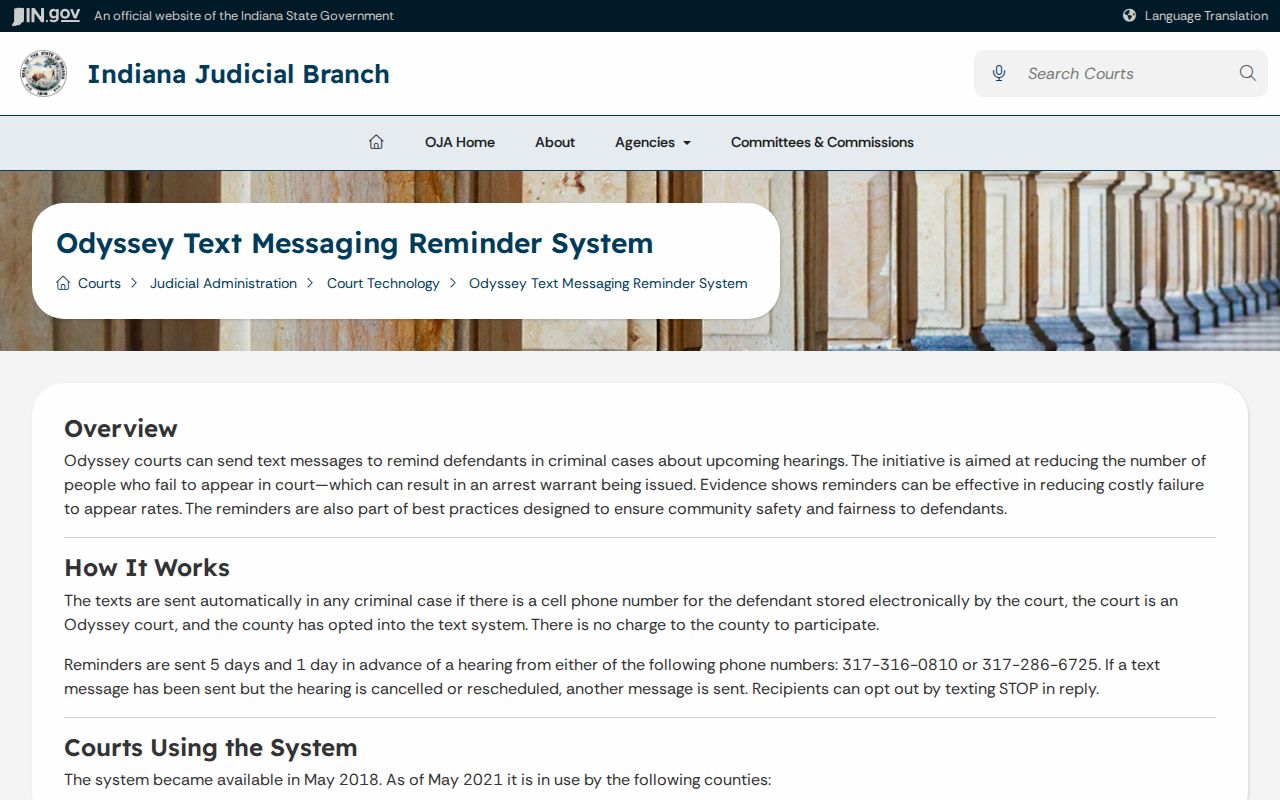
The official hearing date still governs. Nothing else reschedules it. Keep the case number and the Clerk's current phone details with the calendar entry. If a text seems inconsistent with MyCase or a prior court order, call the Clay County court before the setting instead of assuming the newest message changed the judicial schedule.
Clay County Warrants by City
Clay County's five largest incorporated places all use the county and state court path. None runs a separate municipal-court warrant channel. Start a warrant search in MyCase, turn to Superior Court for traffic and ordinance cases, or call the Clerk for records. Enforcement questions go to the Sheriff.
Brazil Warrant Search
8,181 residents · county seat; no city warrant portal located
Clay City Warrant Search
878 residents · no town court or warrant lookup located
Knightsville Warrant Search
702 residents · police agency documented; court records remain county-held
Harmony Warrant Search
677 residents · no municipal-court or warrant page located
Staunton Warrant Search
472 residents · police agency documented; no city warrant portal located